When making this card game I thought about my 2 favorite card games, Sushi Go and Star Realms. I really like the set collecting aspect that both Sushi Go and Star Realms have, especially the high risk high reward set collecting present in Sushi Go. My favorite thing about Star Realms is the deckbuilding aspect where you have weak cards initially and use those to purchase cards and make your personal deck better and better to eventually defeat your opponent. That deckbuilding mechanic really reminds me of the trading card games I played when I was younger except without the pay to win aspect that I hated so much when I was younger. I also decided to theme my game around the idea of art collecting and art museums, for one because I really enjoy art museums and also because it would make sense in the context of the mechanics I wanted to have in my game, namely art often being seperated into categories and art collecting working well with the idea of getting new cards in a deckbuilding game. In terms of the theme the way I thought of it is that you play as dueling art collectors trying to put on galleries to gain prestige and fame where the deck each player has represents the total resources they have while the hand represents the resources they have at the moment.
While my game may seem very similar to Star Realms on the surface that is due to it being built on the same deck building core mechanics of buying new cards for your deck and cycling through that deck as the deck gets stronger and stronger. My game differs from Star Realms the most in one of the most fundamental aspects of card games in general: how cards are played (which I will get to more in the rules section). My game is also a lot less complex than a lot of other deckbuilding games that have additional elements that increase the complexity of the game, I tried to keep my game as simple as a deck building game could be and really designed very close to the core mechanics of a deck building game.
The deck is a 74 card deck with 14 starter funding cards, 10 action cards, 10 investment cards, and 40 art cards. The art cards are further subdivided into 4 distinct categories (Renissance, Baroque, Impressionism, and Contemporary) with 10 cards being in each set. Starter funding cards and investment cards provide value which is used to purchase cards in the game. Action cards allow the player to take special actions like drawing extra cards or forcing their opponent to have less cards in their hand their next turn. Art cards must be played together in at least a set of 2 where all cards in the set belong to the same category (ex. two Renissance cards can be played together but one Baroque and one Impressionism card cannot be played together). When played art cards give prestige which is like victory points in this game as the first person to 20 prestige wins. My personal deck I used while prototyping was just made up of index cards written on with pencil so I could easily change things on the fly. To see a detailed list of all the cards click here.
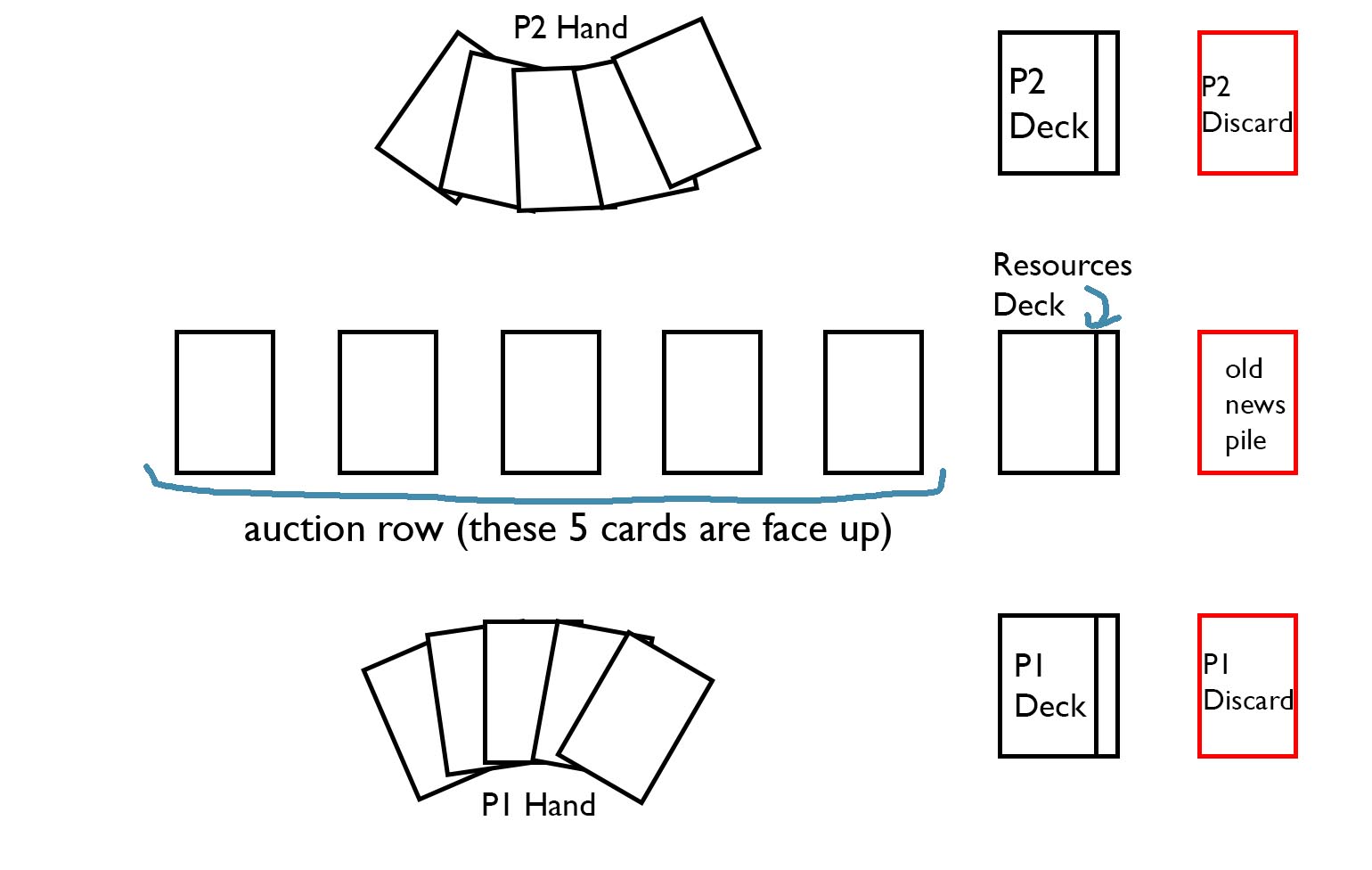
This game is only for two players. Please refer to the diagram below for some terms that I will refer to in this section:
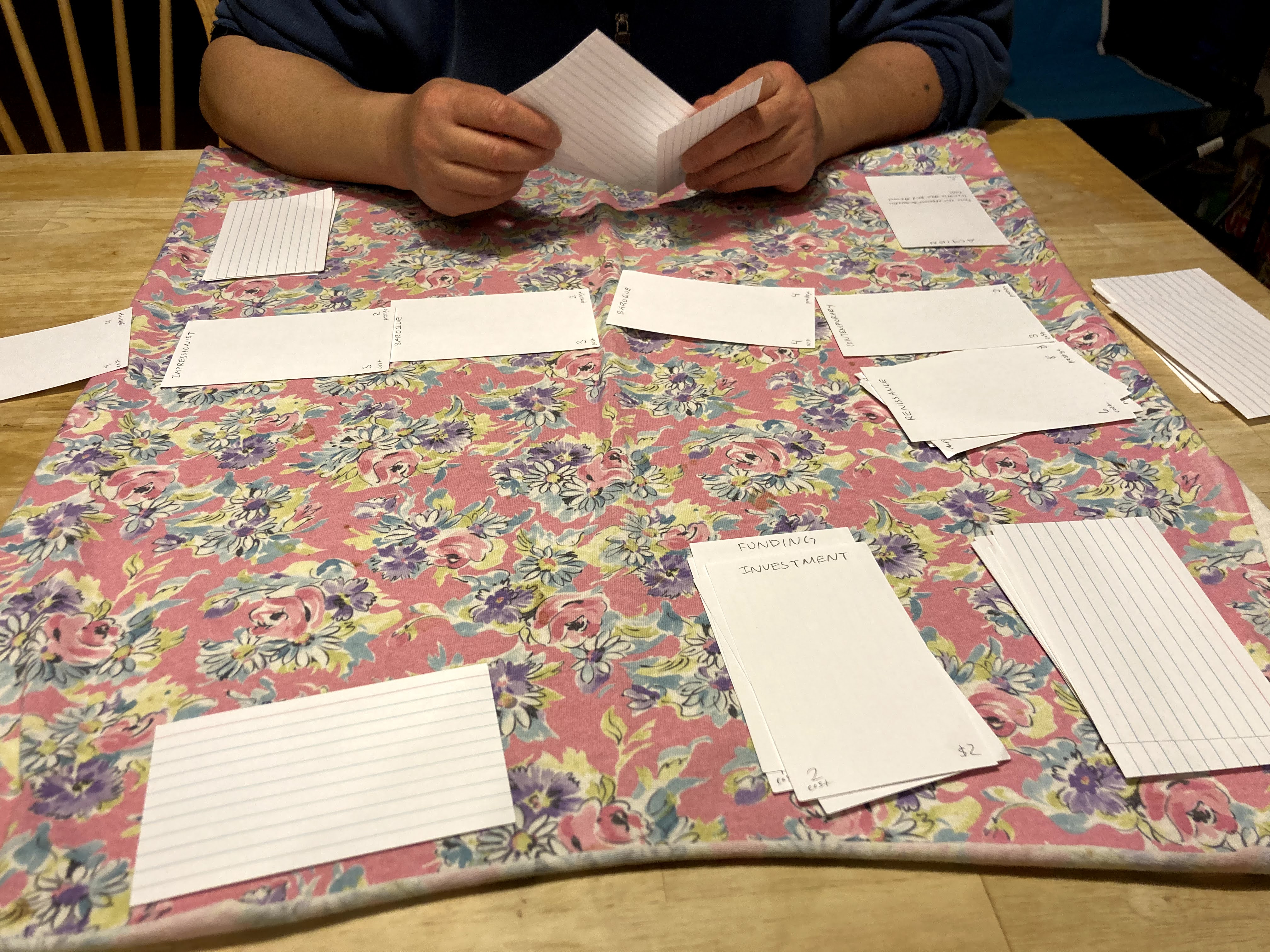
I played the game 3 times in total with my dad. I won all three times which wasn't suprising considering the fact that I made this game and the fact that he's historically bad at games, but he did put up a really good fight in the first two games.
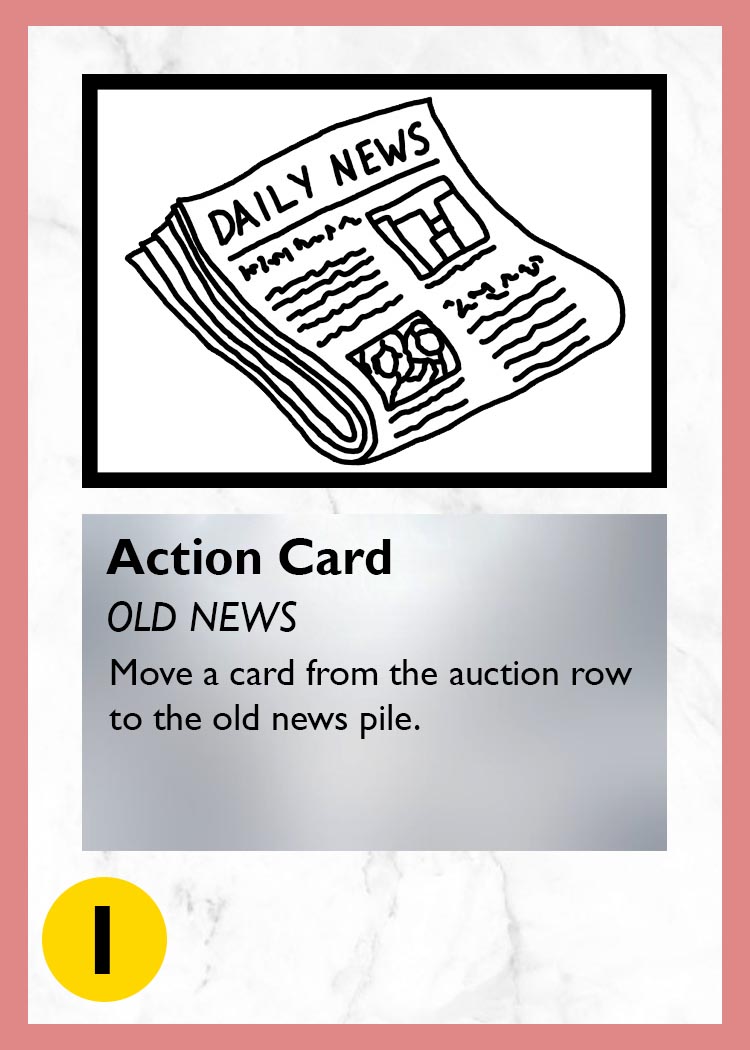
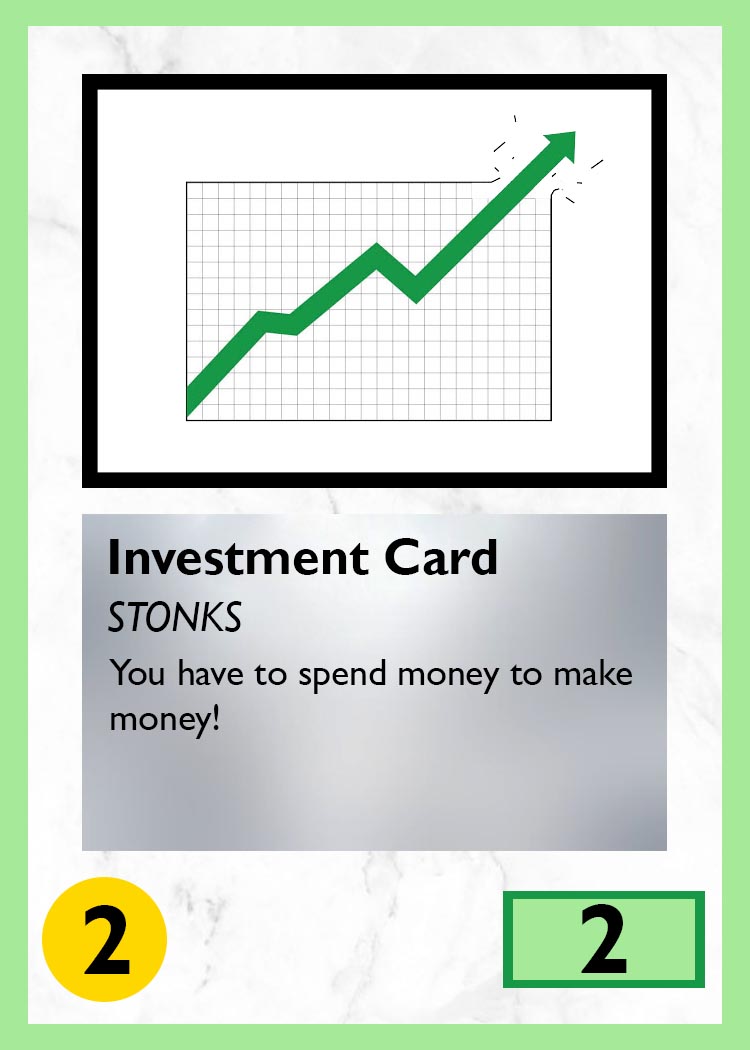
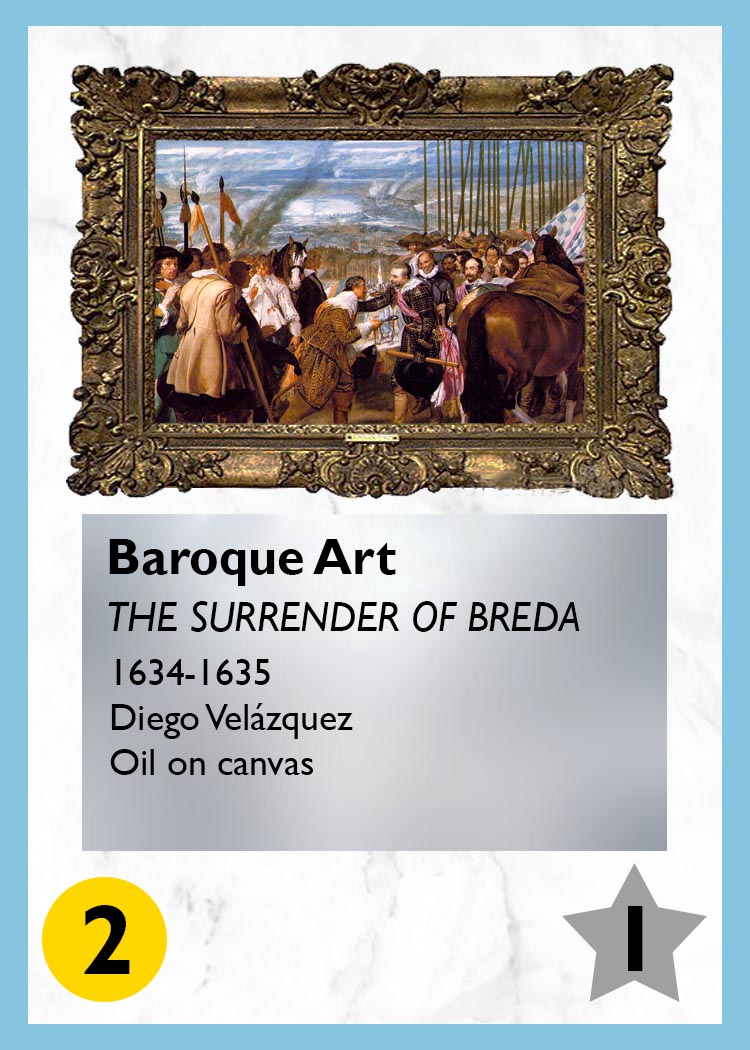
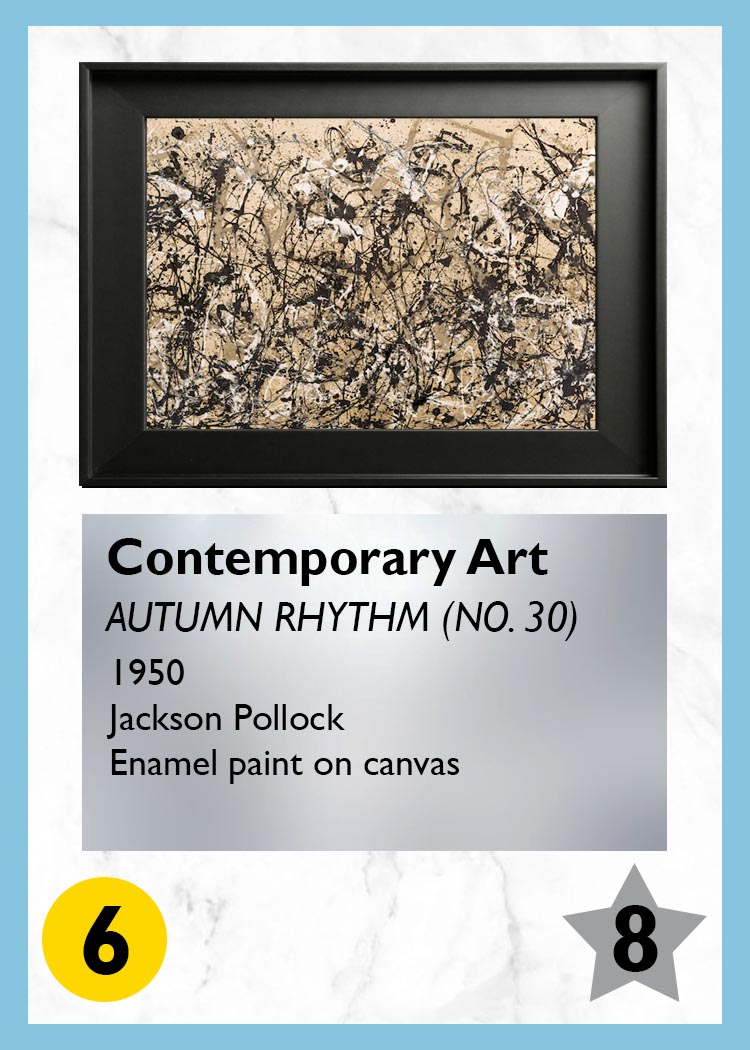
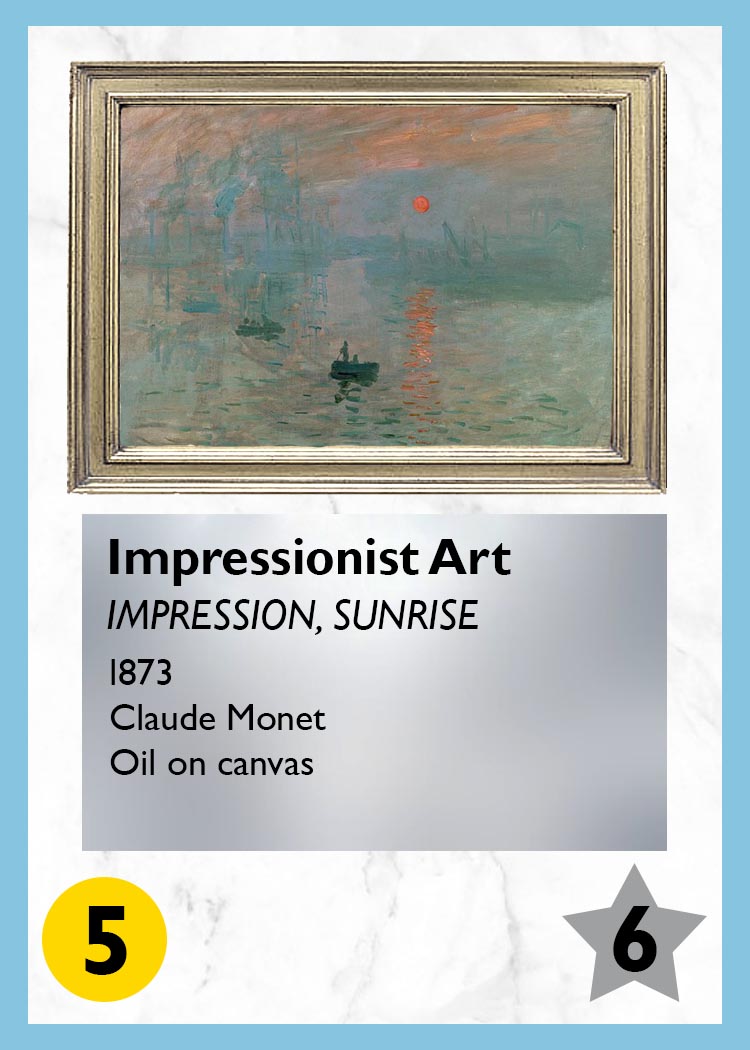
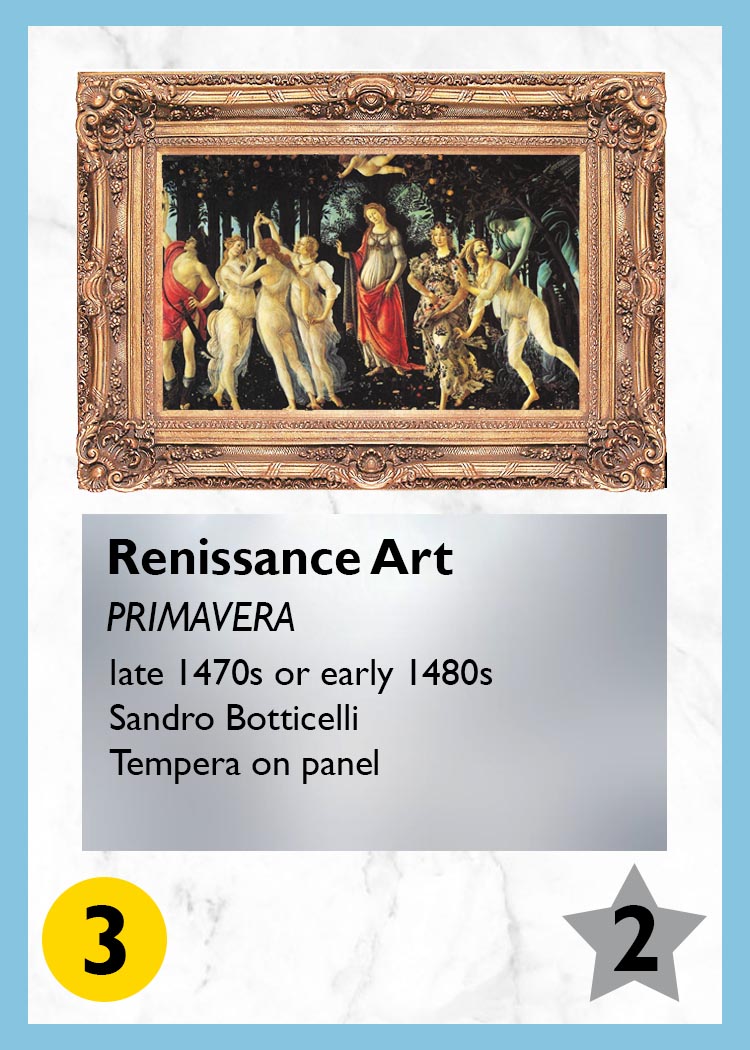
For the actual look of the cards I wanted to stay true to the museum theme of the game so that's what inspired the marble background of the cards. I felt like it would be boring and plain for the background of the card to just be a plain color so I went with a marble pattern which I felt added enough texture to the card to not be boring as well as not being a pattern that's super in your face and distracts from the actual important content on the card. For the card text portion I decided to model it after the plaques you often see in art museums that will have information about the art. For the icons that denote, cost, value, and prestige depending on the card I wanted to keep it relatively simple as I didn't know how to do complicated things in Photoshop but also because giving each value a different shape would make it easier to identify what the card was giving based on a simple glance. Every single deckbuilding game that I've played has used a gold circle icon to denote cost so I decided to keep with that trend. I decided to make the icons for cost and for value different even though you use value to pay off cost because I thought it would be confusing to the player to have 2 of the same icon on a card and not know which one is the cost and which one is the value the card gives so I modeled the icon for value off of money. For prestige I knew I wanted to do something with gold or silver along the lines of getting an award or medal but since I already used a gold circle for cost I decided to do a silver star to contrast in terms of color but because I also associate stars with good work.
As for how the art ties into the mechanics of the games, I tried to make it instantly obvious what type of card each card was based on the color of the border of the card (green for investment, blue for art, and red for action). To differentiate the different sets of art I made two different design choices. In the card text I decided to make what category art the art card belonged to be the first item in the text, as well as the largest and only bold text. I also gave each of the differnet types of art a different frame and the idea was that all of the art that belonged to the same category would have the same frame so you could see if they were the same category through a visual cue.
Overall I was suprised at how fun this game was. I will have to say I didn't get to test a lot of different strategies or play against a bunch of different strategies as I could only really play against my dad so I will admit the bonus points could potentially be unbalanced for groups aboce 3 cards as I didn't ever have the patience to accumulate a set that high. Even though it is one of the most simple deckbuilding games I've ever played you still have to pay a lot of attention to get good and keep track of your opponent's cards as well as your own which keeps the game engaging even though it's not your turn. More testing with different people would probably be needed to polish the game even further but in it's current state it's a pretty fun game that combines skill, strategy, and luck.